

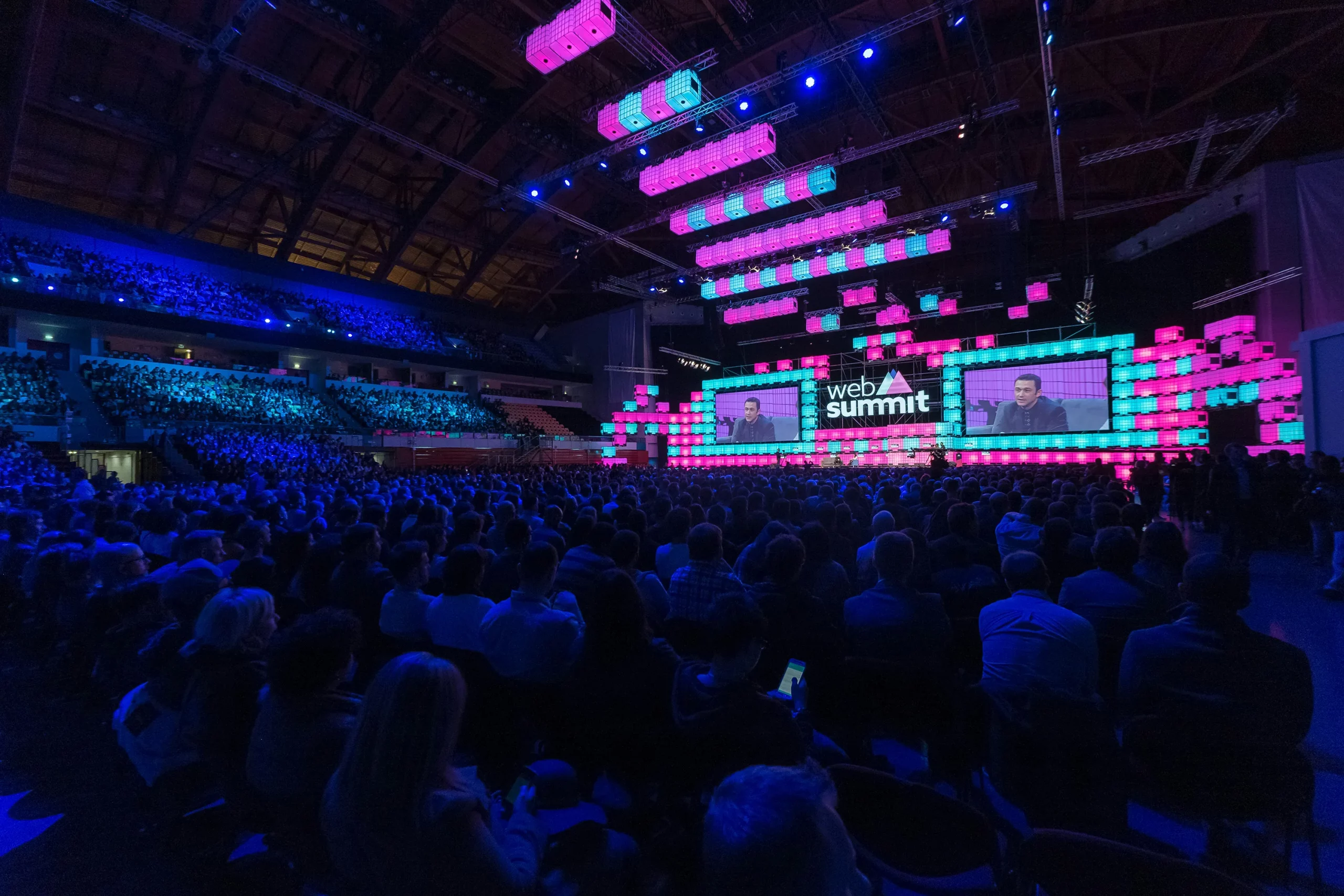
An event can bring hundreds of people together in one place. But getting them to understand, experience, and remember what a brand wants to communicate requires much more than setting a date and choosing a venue.
Every decision is part of the experience: the concept, the space, production, content, staff, logistics, and the way the audience interacts with the brand.
That’s why organizing a brand event means turning an objective into an experience designed to connect with a specific audience.
At grupoSky, we provide Events Solutions to support brands from initial planning through event production, coordination, and execution.
What should an event deliver for a brand?
An event can serve many different objectives.
Launching a product, bringing clients together, building brand awareness, creating a consumer experience, strengthening business relationships, or connecting a brand with a specific audience are just a few possibilities.
But the format should be determined by the objective, not the other way around.
Before deciding where the event will take place or what elements it will include, it’s essential to define what we want to achieve, who we want to bring together, and what we want to happen during the experience.
The connection between in-person experiences and building relationships with brands continues to play an important role. The 2025 Freeman Trust Report, developed by Freeman in partnership with The Harris Poll, explores how live events influence brand perception and the actions attendees take afterward.
Corporate and brand events: every event should have a clear objective
Corporate events and brand events can take many different forms.
A company may need to organize a presentation, client event, corporate celebration, partner experience, or an event specifically designed to connect the brand with a particular audience.
What matters is that every element works toward the same goal.
The venue, visual identity, content, production, and guest experience should come together to create an experience that is consistent with the brand and the event’s objectives.
That’s why planning needs to begin long before the day of the event.
Defining the concept, assessing technical requirements, establishing timelines, coordinating vendors, and anticipating the attendee journey helps turn an initial idea into a viable event.
Product launches: Introducing a product through an experience
A product launch is one of the moments when a brand can generate the most attention around a product.
That’s why a product launch event should go beyond simply showcasing it.
The goal may be to give clients, consumers, partners, media, or guests the opportunity to discover the product, understand its features, and interact with it in an environment specifically designed for its launch.
The space can incorporate demonstrations, presentations, product areas, audiovisual content, interactive activities, or multiple touchpoints.
The right combination will depend on each launch.
What matters is keeping the product at the center of the experience and ensuring that every element of the event supports the message the brand wants to communicate.
Exclusive experiences designing for engagement
Not every event needs to follow a conventional format.
For some projects, the goal is to create a more immersive experience where guests can actively participate.
Themed spaces, sensory experiences, hospitality, entertainment, content, demonstrations, and interactive activities can all be used to create these types of brand experiences.
But adding more elements doesn’t automatically create a better experience.
Every element should have a purpose within the project and help answer one question: what do we want attendees to do and feel during the event?
When the concept, space, and experience work together, an event becomes more than simply a place where something happens. It becomes a way to create meaningful interaction between the brand and its audience.
Miami as a destination for events and brand experiences
Miami brings together tourism, hospitality, retail, entertainment, and an international audience, creating a particularly dynamic environment for corporate events and brand experiences.
Recent data from the Greater Miami Convention & Visitors Bureau highlights the scale of this market: Greater Miami and Miami Beach welcomed 28.3 million visitors in 2025, reinforcing the city’s position as an international destination.
For brands, this combination can create a wide range of opportunities, from corporate events and product launches to experiences designed for consumers, clients, or international audiences.
But working in a market like Miami also means adapting each project to its location, audience, schedule, and operational requirements.
The venue shouldn’t simply be treated as the backdrop for an event. It is also part of the experience.
From concept to production: turning an idea into a real event
A creative idea needs to be feasible to produce.
That’s why a fundamental part of event production is transforming the initial concept into all the physical and technical elements required to bring it to life.
Scenic elements, furniture, signage, lighting, branded graphics, audiovisuals, product areas, and other production resources may all be part of the project.
From the earliest stages, it’s important to determine what is needed, how it will be produced, how it will reach the venue, and how it will be installed.
Connecting design and production helps maintain greater consistency between the original concept and the final result.
When a project also requires custom spaces, materials, or branded elements, our Marketing Services allow us to integrate design, production, and logistics into the overall execution.
Logistics starts long before the guests arrive
For attendees, the event begins when they enter the venue.
For the team organizing it, it starts much earlier.
Materials, vendors, schedules, transportation, setup, products, access, and technical resources all need to be coordinated before the doors open.
That’s why logistics shouldn’t be treated as a separate stage of event production.
It is part of it.
Effective planning makes it possible to establish what needs to happen at every stage and anticipate dependencies between different areas of the project.
The more elements involved, the more important it becomes to have a structure capable of centralizing information, responsibilities, and execution timelines.
The team also shapes the event experience
A venue can be perfectly produced, but a significant part of the attendee experience depends on the people they interact with.
Guest reception, check-in, information, hospitality, engagement, guidance, and on-site assistance may all require different professional profiles.
That’s why staffing should be part of the planning process.
Team members need to understand the event they are representing, their responsibilities, how they should interact with attendees, and what information they need to know.
When a project requires these profiles, grupoSky Staffing Solutions allow us to select, prepare, and coordinate Event Staff, Brand Ambassadors, and Specialized Profiles based on the specific needs of each event.
This allows production and staffing to work together as parts of the same experience.
On-site event coordination: making sure everything happens at the right time
An event brings together many moving parts that need to work simultaneously.
Vendors, staff, guests, content, production, and schedules all need to follow the same plan.
But even with detailed planning, adjustments may be required during execution.
A schedule change, higher-than-expected attendance, or an operational need may require a quick response.
That’s why on-site event coordination is essential.
It’s not just about making sure the schedule is followed. It means supervising different areas, identifying issues, and making decisions that keep the entire event running smoothly.
Why work with an event agency in Miami?
Organizing an event requires coordinating multiple areas of expertise.
When each area is managed independently, the number of contacts, vendors, and processes the brand needs to oversee increases.
An event agency in Miami that can manage multiple stages of the project can centralize coordination and maintain a comprehensive view of the entire event.
This allows decisions to be made with an understanding of how they affect the rest of the experience rather than treating each area separately.
The goal isn’t to add more elements to an event.
It’s to make sure all the necessary elements work together toward the same objective.
Event agency in Miami: from planning to execution
A successful event begins long before the first guest arrives.
It starts by defining what the brand wants to achieve and building the concept, venue, production, staffing, and operations around that objective.
At grupoSky, we bring more than 25 years of experience working with leading brands to the U.S. market, developing Corporate and Brand Events, Product Launches, and Exclusive Experiences.
We integrate planning, creativity, production, logistics, staffing, and execution to tailor each project to its objectives, audience, and specific requirements.
Because organizing an event isn’t simply about making sure everything is ready.
It’s about making sure everything comes together when the experience begins.
Are you planning an event?
Tell us what you want to achieve, and let’s explore how to turn it into an experience that reflects your brand.
Frequently asked questions about events
What does an event agency do?
An event agency plans, coordinates, and executes the different areas required to bring an event to life. Depending on the project, this may include concept development, production, logistics, vendor management, staffing, and on-site coordination.
What types of corporate events can be organized in Miami?
Miami offers opportunities for a wide range of formats, from corporate events and product launches to brand events, exclusive experiences, client events, and events designed for specific audiences. The right format should be defined based on the objectives and target audience of each project.
What does event production include?
Event production can include venue and space design, scenic elements, furniture, lighting, audiovisual production, branded graphics, signage, setup, and technical coordination. The specific requirements will depend on the format and scale of the event.
How do you organize a product launch event?
The first step is to define the objective, target audience, and key message. From there, the venue, concept, production, content, activities, staffing, and logistics can be planned to present the product in a way that is consistent with the brand.
Why is staffing important for an event?
Because the team interacts directly with attendees. Proper selection and preparation of Event Staff, Brand Ambassadors, and Specialized Profiles helps ensure that guest service, information, and the overall experience remain consistent with the brand.
Can an event agency also manage production and logistics?
Yes. An integrated approach makes it possible to coordinate planning, production, logistics, and execution within the same structure, reducing the number of contacts involved and making coordination between different stages of the project more efficient.
Can brand experiences be organized in addition to corporate events?
Yes. In addition to corporate events, brands can create brand experiences, product launches, and immersive or interactive experiences designed to generate direct engagement between the brand and its audience.
Can the same partner manage events, marketing, and staffing?
Yes. At grupoSky, we can integrate Events, Marketing, and Staffing services within the same project when needed, coordinating production, teams, logistics, and execution.
How do you choose an event agency in Miami?
When choosing an event agency in Miami, it’s important to consider its experience, production capabilities, coordination, range of services, and ability to manage different stages of the project. The agency should also understand the brand’s objectives before defining the event format.
How far in advance should you plan an event in Miami?
It depends on the scale, location, production requirements, and specific needs of the project. Events that require specific venues, custom production, permits, multiple vendors, or large teams typically require more planning time. Starting early provides more options and allows each stage of the event to be coordinated more effectively.